
Do you suffer from:- panic attacks or anxiety feelings?- problems with concentrating? - sleep problems? - chronical pain or tinitus? - problems with relationships? - health issues? |
This music helps:- feeling less anxious!- to increase focus and attention! - creating greater tolerance! - improving relaxation! - having fewer tantrums! |
Contact us.
What is Therapeutic Music?
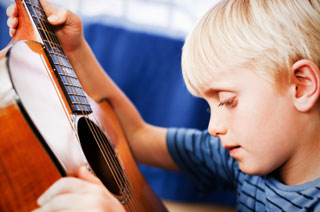 Therapeutic music is the use of the healing elements of music and sound to create an environment conducive to healing. A large number of studies have confirmed the significant benefits that music provides premature babies, cancer patients, patients both before and after surgery, people with attention deficits and Alzheimer sufferers.
An increasing number of health administrators are recognizing and investing in the benefits of therapeutic music. The type of therapeutic music played will depend on the needs and the circumstances of the patient. Therapeutic musicians are trained to assess the behavior and condition of the patient and what type of communication the patient is able to receive. Well-documented studies have demonstrated the efficacy of therapeutic music in regulating heart rhythms and decreasing pain and anxiety levels.
Music therapy is used to help victims of severe brain trauma, children on the autism spectrum, and seniors suffering from Alzheimer's disease. For children with ADHD, music therapy bolsters attention and focus, reduces hyperactivity, and strengthens social skills.
How does it work?
Music provides structure.
Music is rhythm, rhythm is structure, and structure is soothing to an ADHD brain struggling to regulate itself to stay on a linear path. "Music exists in time, with a clear beginning, middle, and end," says Kirsten Hutchison, a music therapist at Music Works Northwest, a nonprofit community music school near Seattle. "That structure helps an ADHD child plan, anticipate, and react".
Music fires up synapses.
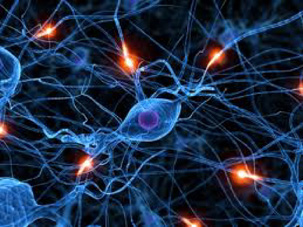
Research shows that pleasurable music increases dopamine levels in the brain. This neurotransmitter -- responsible for regulating attention, working memory, and motivation -- is in low supply in ADHD brains.
"Music shares neural networks with other cognitive processes," says Patti Catalano, a neurologic music therapist at Music Works Northwest. "Through brain imaging, we can see how music lights up the left and right lobes. The goal of music therapy is to build up those activated brain muscles over time to help overall function."
Just as Giffords used music to retrain her right brain to help her to talk, ADHD children can use music to train their brains for stronger focus and self-control in the classroom and at home.
Music is social.
 "Think of an orchestra," says Tomaino, a 30-year veteran in music therapy. "If one instrument is missing, you can’t play the piece. All 'voices' are necessary."
This is what Hutchison teaches in "Social Skills Through Music," an eight-week course for children ages seven to 10.
Students participate in ensemble playing, write collaborative songs, and practice for an end-of-session performance.
"Students learn to listen, take turns, anticipate changes, and pick up on cues in ways they might not do outside of a music-therapy session," says Hutchison.
The music helps to reduce the symptoms of: ADHD, ADD, trauma, depression, anxiety, relationship problems etc.
Become a member
People with stress related symptoms, as depression, anxiety, relationship problems, burnout, AAD or ADHD and many more will find here music to ease their symptoms.
1. Register and access the full" Therapeutic Music" library.
2. You can start immediatly to ease your psychological stress.
3. The music is always where you are. It is cloud server based. You will never forget it. As long as you have an internet connection you can listen and contemplate to it everywhere. In any situation.
Links
Life Coach Ibiza is a psychotherapist and life coach on Ibiza
Therapeutic Music News interesting information
Greenheart Music is an ecologic music platform
Greenheart Travel is a student exchange company based in Madrid (Spain) and Chicago (IL/USA)
Max Planck Institute for Human Cognitive and Brain Sciences
Wikipedia music history of Ingmar Hansch
ITP Integral Transformative Practise


